

Distortion
The world of effects is a vast and complex one, a world that remains a mystery to many but that we guitarists must master if we are to find our own sound. From Chorus to Distortion, from Flange to Delay… the possibilities are endless, and this complexity is compounded with each additional link in the chain. Effects are available in many guises today, with rack-mounted devices and software on our computers; however, we will concentrate on good old fashioned pedals.
This time around – distortion, which is perhaps the most likely point for guitarists to begin experimenting with effects.
The Science
A distortion effect is achieved by altering the dynamic range compression of or clipping the input signal from the guitar, adding additional harmonics and overtones to the signal to create a richer and fuller sound. The term ‘distortion’ covers a wide sonic spectrum; from the warm, subtle thickness added to tone by the mild distortion (which is probably better described as overdrive) most often heard in the blues through the buzzing tone of a 60s fuzz to a screaming thrash distortion as heard in modern metal, there is a distortion for every musical genre.
For a more in depth explanation of the technicalities around distortion and signal clipping, please click here.
Where did Distortion come from?
Distortion began by accident, by dislodging tubes in amplifiers or as a result of them being dropped. Speaker cones were also perforated bringing about a similar result. What began by accident soon started to occur deliberately and the results were first heard on recordings by the Kings of Rhythm and Howlin’ Wolf.
There are several recordings cited as the first recorded example of guitar distortion, but most agree that it was Ike Turner’s Kings of Rhythm with their 1951 recording of ‘Rocket 88’. Link Wray is also notable for deliberately dislodging power tubes in his amps to get a dirty sound for solos.
Tony Iommi of Black Sabbath asked amplifier manufacturers “Can’t we get something to let me get overdrive straight from the amp” and was laughed at. Despite such early setbacks, amplifier manufacturers soon caught on. Randall Smith (founder of Mesa/Boogie and patent holder for the multi-channel amplifier) tells the story about when he brought his design to the patent office, the old guy behind the desk looked at the schematic and said “Nice, but this is going to distort.” And then Randall spent the next half hour trying to explain to him how that was a good thing… clearly we’ve moved on significantly from there.
In the 1960s, Jimi Hendrix was one of the first guitarists to experiment with dedicated distortion effects by way of his fuzz pedals.
Choosing a Distortion Pedal
What makes a good guitar sound is very subjective, and with so many pedals in the distortion family available there are very few that are without merit. The distortion pedals most likely to be found in the signal chain of your guitar hero are always a good place to start and the ‘big three’ today are the Ibanez Tube Screamer (TS9 and TS808), the Boss DS-1 and the Electro-Harmonix Big Muff. These pedals are a good compromise between cost, features, range of sounds achievable and durability… I own all three of them, as probably do many of you… and all three of them see regular use.
Most ’boutique’ distortion pedals are variations on the circuit designs of the big three, and recently we have seen the introduction of dual pedals from Boss, Digitech and Ibanez’s Jemini, allowing the player to have 2 preset distortions ready to go.
The Best Distortion Pedal
Many distortion pedals are pretty similar, and their minor differences in voicing are a matter of personal preference. Also a matter of how they fit in your overall signal chain. Me? I luuurve the sound of the ‘Gain 2’ channel of my amp, plus an Ibanez TS-808 Tubescreamer!
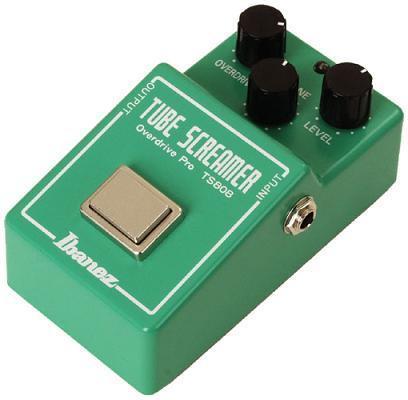
The TS-808 is an absolute piece of cake to set up, either ahead of time or tweeting as yo go.. even under less than perfect stage lighting.
Why I Like It – The simple design of the TS-808 makes it very (very) easy to operate. The voicing of it compliments my overall setup, and it’s great for adding depth to an already pretty filthy lead tone! Check one out if you’re looking for the best distortion pedal – you won’t be disappointed!
So that’s my guide to Distortion. You can find more articles on scales and guitar technique to help you develop as a player here, as well as checking out the Guitar Mastery series to get better at guitar! If you’ve got any questions please get in touch on Facebook or Twitter.
Until next time… keep it dirty!


